
Get Great Photo & Video Coverage of Your Event in 2026 – 10 Key Tips for the MarCom Team
Date: January 12, 2026
Table of contents
- Introduction: Why Event Coverage Standards Are Rising in 2026
- Start With the Why: Aligning Event Coverage With Your MarCom Strategy
- The Role of AI in Event Photo & Video Production: Value and Limitations
- Being Realistic About What Video and Photo Crews Can Achieve
- Event Video Formats That Matter in 2026 (Recaps, Social Clips, Highlights & Beyond)
- Coordinating Full Session Coverage and Dynamic Content Production
- Determining the Right Number of Videographers and Photographers
- Logistics and Workflow Planning With Your Coverage Agency
- Defining Deliverables Clearly: Quality, Formats, and Timelines
- Choosing Between Run-and-Gun Interviews and a Dedicated Interview Setup
- Contracts and Legal Safeguards for Event Photo & Video Coverage
- Conclusion: Turning Event Coverage Into Long-Term Value
The bar keeps rising in audience expectations of event coverage. Capturing an event in 2026 will mean polished content fast, teams want usable assets for multiple channels, and AI is now part of the workflow. After three decades in this business — on both sides of the fence as producer and client — I can tell you there’s a world of difference between decent footage and coverage that truly delivers ROI. This article is for those ordering video and photo production services, not those delivering them, although, as you may well imagine, it can be very useful for the latter as well. Let’s dive in. Here are the ten things you, at MarCom, need to sort out before a single camera rolls.
Start With the Why — and Match It to Your MarCom Strategy
Every event has goals: brand awareness, lead generation, thought leadership, community building, internal morale, product launch momentum… the list goes on. If you don’t define why you want photos and video, you’ll end up with content that looks pretty on a hard drive and does nothing for your objectives.
Once you’ve agreed the why, you can answer questions like:
- What kind of assets do we need?
- Where will they be used? (Social, website, internal comms?)
- How soon after the event do we need them?
Clarity here prevents scope creep — the Achille’s heal of ROI.
IMD’s 2025 Graduation ceremony highlights video, shot by Fullframe Creative.
Understand What AI Brings to the Table — and What It Doesn’t
AI isn’t a replacement for pro crews. But in 2026 it does add real value: automated caption generation, smart shot tagging, content indexing, and rough-cut assembly can shave hours off post-production workflows. For example, auto-generated captions and transcripts are now a top AI use-case for video content, used by nearly 60% of professionals doing video work.
AI can also help with scene detection, person recognition, and draft edits — kicking off a first cut while editors focus on storytelling. I hate to bore you with this trite caveat, but it bears repeating: AI needs human oversight. Machines don’t pick good sound bites, contextually meaningful shots, or narrative arcs — producers with editorial experience do.
If you don’t already know what agency will be providing the event video service and event photography service you need, asking the aspirants during your RfP how (if) they use AI in their workflow would be a good way to quickly find out who’s on the ball and ahead of the pack and who’s not.
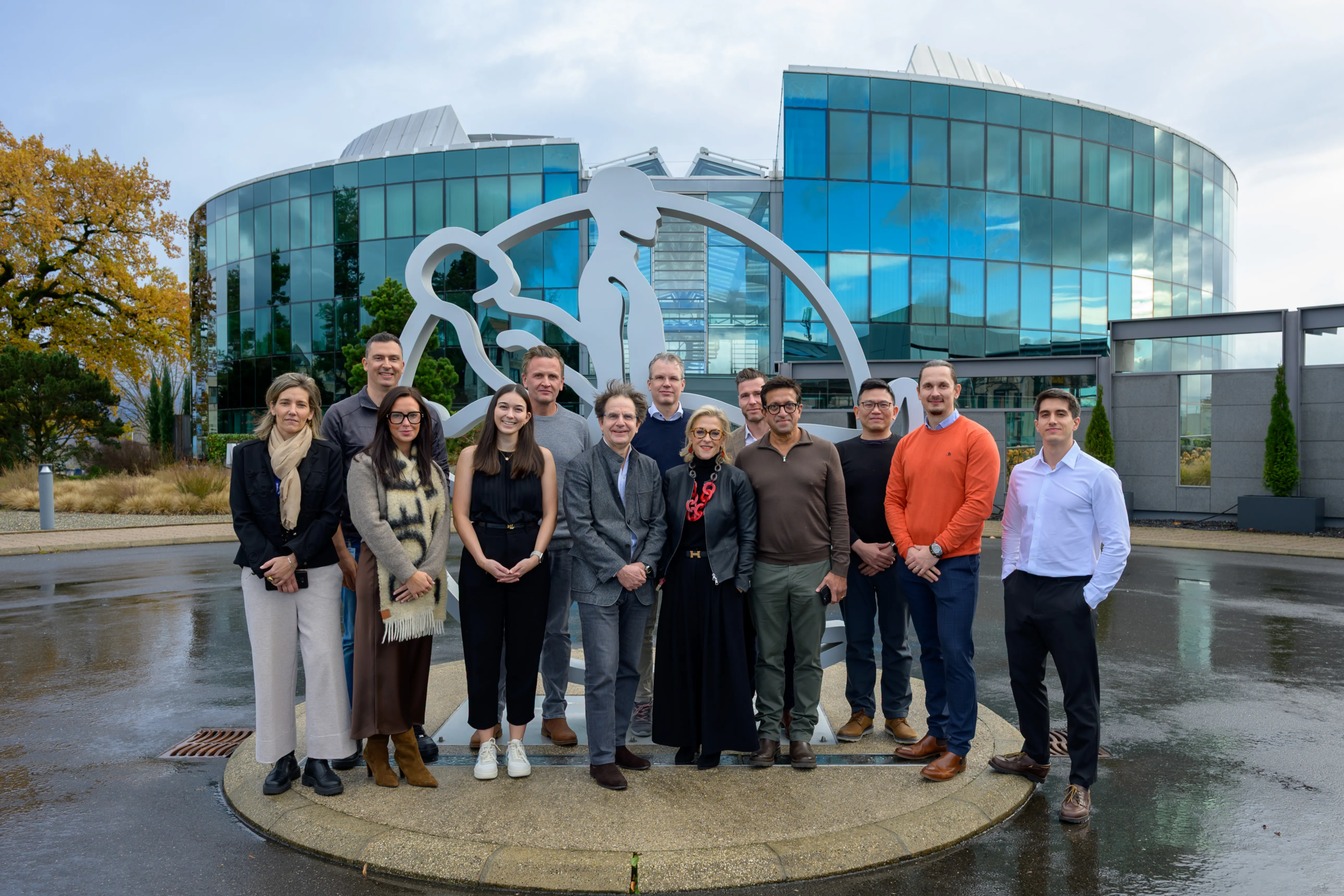
Group photo during a corporate event we covered at Medtronic in Tolochenaz
Be Realistic About What Crews Can Achieve
Yes, I understand, the budget is tight and yada yada, but take it from me, you will not be saving money by hoodwinking your prospective partner into thinking this will be a cake walk and then getting them to work 15-hour days to “capture everything and make it amazing.”
It’s tempting to believe a crew of two with a couple of cameras can catch every talk, every reaction, every moment worth sharing — but in a dynamic live environment, reality will bite and it will all go sideways: mistakes, lost files, stress, anger, frustration, poor results, confusion. Not worth it!
A big part of avoiding this trap is…well, to read this article. Why? Because if you know, you won’t be operating under illusions or wishful over-simplification. A tight budget is a strong incentive to go that route, clearly, but better spend 1000 CHF and get solid coverage in smooth conditions than to spend 750 and end up with frazzled nerves and patchy quality because you put too much pressure on the crew. Be wary of waste and abuse, but, based on all you read here, and all you may already know from past experience, be realistic too, about the time everything takes and the risks of mega multitasking.
What about using some in-house support, you ask? Maybe. That depends on your team’s level of expertise and how much time they have too. Video marketing data shows that about 55% of organizations produce videos in-house but supplement with external help, while only 14% outsource entirely. That tells you something: blending internal priorities with external execution is common because a single small crew often isn’t enough.
So be realistic about:
- Coverage breadth (sessions, interviews, b-roll, reactions)
- The deliverables you expect
- Turnaround times
- What constitutes “done”
Set expectations with your production partner early to avoid disappointment — and extra charges.
A highlights video done by Fullframe Creative for CCHN
Know the Formats That Matter in 2026
The basics of event video production and photography remain:
- Daily recaps — short highlight reels published while the event is still fresh
- Social media video clips — optimized for reels, shorts, and stories
- Final highlight videos — polished pieces for website and your post-event digital marketing service
Keep this striking statistic in mind: video content continues to be one of the most impactful ways brands communicate — and 90% of marketers rate video marketing as essential to strategy.
But now, allow me to lay this tsunami of innovations on you. Clearly you may not be able to incorporate all of these, not just in terms of logistics but also budget and more. That said, it’s good to know what’s possible and what’s trending, and to cherry-pick among these innovations, as and when feasible.
Based on current trajectory and emerging technologies, here are the key trends shaping event video production for 2026:
Immersive & Interactive Experiences
- 360° Interactive Event Archives: Attendees can “walk through” past events virtually, choosing their own viewing angles
- Holographic Speakers & Performers: High-fidelity holograms appearing “live” at hybrid events, creating seamless remote participation
- Spatial Audio Integration: 3D audio that matches visual elements, enhancing immersion for VR/AR experiences
AI-Powered Production
- Real-time AI Directors: Systems that automatically switch between camera angles based on audience engagement analytics
- Personalized Event Cuts: AI-generated personalized highlight reels for each attendee based on their interests and attendance patterns
- Automated Post-Production: AI tools for instant editing, color grading, and sound mixing with minimal human intervention
Sustainability & Accessibility Focus
- Carbon-Neutral Productions: Greater emphasis on remote production workflows to reduce travel and equipment transportation
- Real-time Multilingual Subtitles & Dubbing: AI-generated translations with emotional tone preservation
- Neurodiversity-Adaptive Content: Multiple versions of event videos optimized for different cognitive processing styles
Hybrid Event Evolution
- Seamless Audience Integration: Technology that makes remote participants appear as if they’re physically present in the venue
- Gamified Engagement Tracking: Production that follows most engaged audience members in real-time
- Dynamic Content Switching: Different video feeds for in-person vs. remote audiences based on engagement metrics
Technical Innovations
- 8K HDR Becomes Standard: For both live streaming and post-production, particularly for large venue projections
- Volumetric Video Capture: Creating 3D models of speakers/performers for use across multiple platforms
- Blockchain-Verified Content: Immutable records of event proceedings for corporate and regulatory events
Content Strategy Shifts
- Micro-Content Automation: Systems that automatically create 15-60 second clips optimized for different social platforms during the event
- Emotion Analytics Integration: Production decisions influenced by real-time audience sentiment analysis
- Predictive Highlight Generation: AI that predicts which moments will be most shareable before they even happen
Production Logistics
- Modular, Scalable Teams: Smaller crews supported by remote specialists and AI tools
- Cloud-Native Workflows: End-to-end production pipelines in the cloud, from capture to distribution
- Drone Swarms: Coordinated multiple drones capturing synchronized aerial shots previously impossible
Audience Expectations
- Instant Access: Viewers expect edited highlights available within minutes of sessions ending
- Interactive Elements: Ability to choose viewing angles, access supplementary materials, or ask follow-up questions within the video player
- Cross-Platform Consistency: Seamless experience across VR headsets, mobile devices, and traditional screens
Key Implications for Event Planners:
- Budget Allocation Shift: More resources directed toward technology and less toward traditional crew size
- Skillset Evolution: Demand for producers skilled in both traditional video and interactive/immersive technologies
- ROI Measurement: More sophisticated analytics tying video engagement to business outcomes
In a nutshell (yeah, right!), the 2026 landscape represents a convergence of cinematic production with interactive technology, where events become persistent, personalized experiences rather than one-time occurrences. The most successful productions will balance technological innovation with authentic human connection.
Corporate event videography by Fullframe Creative for Pepsico in Coppet
Coordinate Between Session Coverage and Dynamic Content
One of the biggest mistakes MarCom teams make? Assuming the team capturing the vibe footage and b-roll will also have footage from keynote speeches, panels, workshops, and breakout sessions. How could they, and yet…
If you want clips from sessions (and you almost always do), then the agency must:
- Provide crew and gear for full session coverage in every room. That or liaise with the venue AV team to figure out how to access the full session footage after each session
- Deliver that footage to the editing team working on your daily recaps and highlight reels
- Clarify who picks the sound bites and selects the cuts (you may well want a producer to listen to the key sessions to pre-pick out the soundbites (even making a rough estimate of where/when in the footage each should be findable in post-production. If you don’t, bear in mind that producers or video editors will have to wade through the full session afterwards to find those soundbites)
This is a tricky part of proper event coverage. It can be costly and relatively inefficient to assign producer to sit through whole sessions just to pick out soundbites. One smart option is division of labor between the agency and the client’s comms team, who sometimes even have (or want to) sit through the sessions anyway. So they might as well be assigned the task of listening out for ideal soundbites.
PRO TIP: Have the comms person assigned start the session in the AV booth of the room in question. They can then start a timer just as the AV team hits rec on the session video taping. That way, soundbites can be approximately timecoded, which will help a lot when the list is handed over to the video editors turning around the daily recaps and social media videos.
Match Crew Count to Your Schedule
When sessions or happenings overlap, you need multiple photographers/videographers. You don’t want all available crew tied up in one room while another key moment unfolds elsewhere.
Ask yourself:
- How much do sessions overlap?
- Do you need roots coverage, portraits, social clips, and full talks?
- Do you want a roaming photographer and dedicated videographers in each main room?
If there’s doubt, err on the side of a slightly larger team — the cost of a missed keynote moment cannot be over-stated. Also, look for ways to optimize. A good agency producer can help with that, if you can share the schedule and imperatives ahead of time.
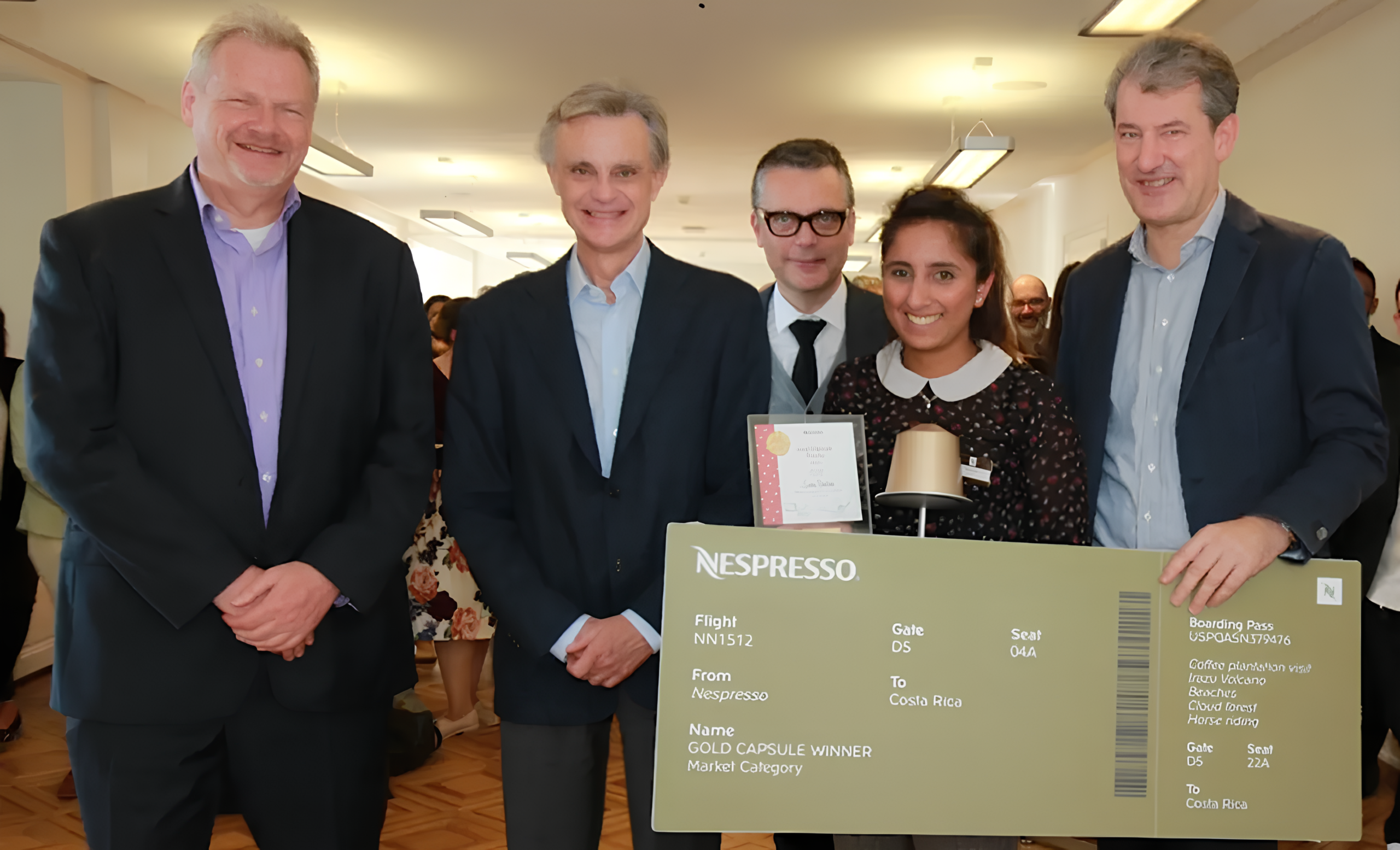
Photo taken by Fullframe Creative at a Nespresso event in Lausanne
Map Out Logistics With the Coverage Agency
Here are a few things that are easy to overlook and that may turn out to be of critical importance in the event video production service and event photography service you end up getting:
- File naming standards — use speaker names, room numbers, topics. File naming is more than admin — it’s how you and your DAM system can sort, search, and publish quickly during and after the event.
- Morning production briefings — plan to meet after breakfast before the day starts to align on what’s to cover, who goes where and what needs to be put out by the evening)
- Cloud backups — what if the production room burns down or there’s a robbery?
- Communication channels — how to reach crews while they’re on the floor
- Coordination with your MarCom and social teams — how will video editors and producers share the drafts for review, and the final videos to post and broadcast?
- Access clearances for every zone they need to shoot
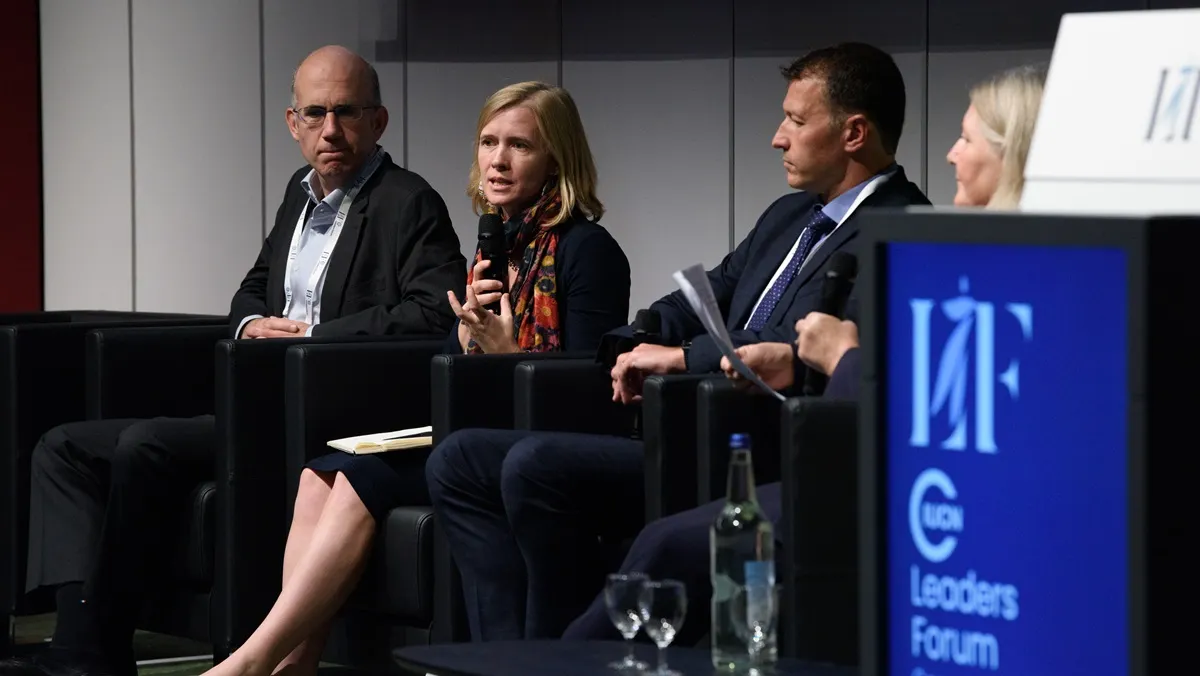
Photo by Fullframe Creative covering the IUCN’s Leaders Forum in Geneva
Clarify Deliverables — Quality AND Quantity
Beyond the number of clips, stipulate quality and specifications. Your contract should clearly state:
- Resolution (e.g., 4K, 1080p)
- Photo DPI for print and web
- Video formats (MP4, MOV, codecs)
- Aspect ratios needed for social vs broadcast
- Turnaround times
- Versioning and revisions
Without this level of detail, you’re basically asking for whatever they feel like delivering — and that rarely aligns with your needs.
Decide if You Want a Dedicated Interview Zone
Run-and-gun interviews have their place — they’re quick, often authentic, but quality can be inconsistent. If you want:
- Testimonials from experts
- VIP thoughts
- Press-style interviews
…then consider a dedicated interview space with lighting, sound, and a backdrop. Otherwise, you’ll end up with audio and lighting that feels like a rushed hallway chat.
Dedicated kits cost more and take space, but the usable content rate is dramatically higher.
Video coverage of the World Heart Summit by Fullframe Creative
Lock Down the Contract — Don’t Skip the Details
A solid event videographer / event photographer contract is your insurance policy. Key clauses should cover:
- Scope of work and deliverables (what’s included and what’s not)
- Payment terms and schedules
- Cancellation and postponement policies
- Ownership and usage rights (who owns the raw footage, edited reels, rights for distribution)
- Liability and indemnification
- Daily hours of work and overtime fees
- Process & timelines for deliverables and feedback
Conclusion
Great event coverage in 2026 is about marrying strategy with experienced execution, as it has always been, but also getting up to speed on what new technology offers. Of course you need clarity on goals, formats, people, and plans, but you also need a partner who can deliver within those guardrails. With all that you’ve read above, you’re a step ahead. Don’t hesitate to reach out to us at Fullframe Creative for more information on what makes for professional and reliable event videography and event photography. We’ve been at it for years in all of Switzerland and beyond. We’ll be happy to help make your event stand out.